The definitive guide to squirting
Squirting guide, explained honestly
Squirting is the release of fluid from the urethra during sexual arousal or orgasm, and it is normal whether it happens to you or not. Answer four questions and get your own five step plan.
Four short questions, just below



No account needed to start. Answers stay private.
Start from where you are today
All guides
Exploring solo
Learn your own build up and release without anyone watching. The easiest place to start.
Read the guide
As the partner
Technique that follows her lead: arousal first, steady pressure, clear signals and zero pressure to perform.
Read the guide
As a couple
Plan it together, prepare the bed, agree on signals and treat the first sessions as exploring.
Read the guideReviews
Rankings with criteria you can check
We compare material, power, waterproofing, noise and price band from published specifications. Paid placements carry a Partner label and never move a product up.
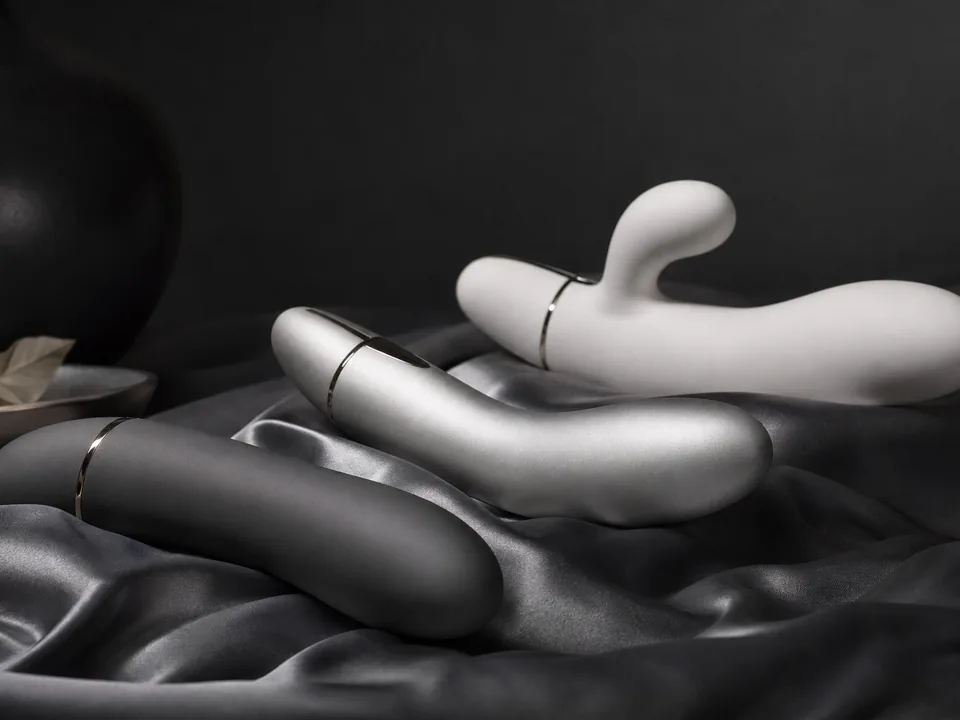
Best toys for squirting, top 4
Full ranking-
1
$$
Magic Wand Plus
Vibratex · Wand massager · water no
-
2
$$$
Le Wand Petite
Le Wand · Rechargeable wand massager · water splash resistant
-
3
$$$
Gigi 2
Lelo · G-spot vibrator · water yes
-
4
$$$
Soraya Wave
Lelo · Dual stimulator · water yes
| # | Product | Type | Power | Water | Price |
|---|---|---|---|---|---|
| 1 | Magic Wand PlusVibratex | Wand massager | Plug-in | No | $$ |
| 2 | Le Wand PetiteLe Wand | Rechargeable wand massager | Rechargeable | Splash resistant | $$$ |
| 3 | Gigi 2Lelo | G-spot vibrator | Rechargeable | Yes | $$$ |
| 4 | Soraya WaveLelo | Dual stimulator | Rechargeable | Yes | $$$ |

Before you start
Set up the room, then forget about it
Worrying about the sheets is a common reason the build up stops. Three small steps take the worry away.
-
1
Empty your bladder first
Then any fluid that comes later is easier to read and nothing to feel embarrassed about.
-
2
Cover the bed
A waterproof blanket or two towels mean you can stop thinking about the mattress.
-
3
Keep water within reach
Arousal takes time. Being comfortable and hydrated helps you stay with it.
Squirting explained
The short answer, from the research
Squirting is the release of fluid from the urethra during sexual arousal or orgasm, and it is normal whether it happens to you or not. This guide explains the science, the first steps and the gear, calmly and without pressure.

Read the full explainer11 chapters, about 13 minutes
What squirting is
Squirter is an independent English-language guide to squirting and female ejaculation. We explain what happens in the body, what researchers have actually measured, and how adults can explore it alone or with a partner, in plain words and without porn. Squirting means that a noticeable amount of clear fluid leaves the body through the urethra during strong arousal or orgasm. Some women experience it often, some once in a while, and many never do. All of these are healthy. Squirting is not a test of a good sex life, not proof of a "real" orgasm, and not something anyone owes a partner. It is one possible response of the body, and understanding it usually makes sex more relaxed, whatever happens next.
This site exists because the usual places to look leave people confused. Video sites show a performance, toy shop blogs end with a product they want to sell, and magazine pieces rarely go deeper than a list of tips. Here every question gets its own page, written calmly, with sources named and limits admitted.
If you want a personal starting point, the four question squirting readiness check builds a short plan for you based on whether you are exploring solo, with a partner, or as the partner.
The science in brief
Two things often get the same name, and separating them clears up most of the confusion.
Squirting is the larger release of thin, clear fluid. Research suggests this fluid comes mostly from the bladder. It is diluted and usually has little colour or smell, which is why people who experience it often say it does not feel like urination at all.
Female ejaculation in the strict sense is a much smaller amount of thicker, milky fluid. It is thought to come from the Skene's glands, two small glands next to the urethra that share tissue features with the male prostate. You can read the full anatomy on our page about the Skene's gland, and the difference between the two in squirting vs female ejaculation.
Both can happen together, one can happen without the other, and neither is required for pleasure. The area most often linked to squirting is the G-spot area, a zone on the front wall of the vagina, a few centimetres inside, that sits close to the urethra and the tissue around it. Pressure there, often combined with clitoral stimulation, is what many people describe before the release.
The fluid itself has been tested in small studies. Researchers found substances typical of urine in squirting samples and found prostate specific antigen (PSA), a marker of the Skene's glands, in many of them. Our page what is squirt made of goes through those findings one by one, and is squirting pee answers the question people ask most.
What it can feel like
Women describe squirting in very different ways, and there is no single correct version. A common pattern is a growing sense of fullness or pressure low in the pelvis, often similar to needing to pee, followed by a release that feels warm and relieving. Some feel it as part of orgasm, some just before or after, and some without orgasm at all.
The urge to pee is the part that stops most people. It is easy to tighten up, worried about wetting the bed, and that tension holds the fluid back. This is why emptying the bladder first, protecting the bed and knowing the science can change the experience so much. Once you know the sensation is expected, it becomes easier to breathe through it.
Others feel very little warning, and the release surprises them. That is normal too. Some women notice it only as a damp spot on the sheets afterwards. The amount, the timing and the sensation can differ from one session to the next in the same person, depending on arousal, hydration, mood, the cycle and how relaxed they feel. Curiosity works far better than expectation.
Where to start
You do not need special talent, a perfect body or a certain kind of partner. What helps most is time, relaxation, the right kind of pressure and permission to stop at any point. Pick the path that fits your situation.
Exploring solo
Many women find it easiest to learn their own body first, with no one watching and no clock running. Solo exploration lets you notice the feeling of fullness or pressure that often comes before a release and learn to let it happen instead of holding back. Our step by step guide on how to squirt alone covers setting, hand and toy techniques and how to read your body, while how to squirt for the first time is gentler and focuses on the very first sessions. The main guide on how to squirt brings all of it together in one place.
With a partner
When a partner joins, communication matters more than technique. Talk before, check in during and debrief after. A partner who keeps the pressure steady and follows feedback will help far more than one who chases a result. If you are the partner, start with how to make a woman squirt, which is written for the person giving stimulation and puts consent first. For ideas on body angles, see squirting positions.
As a couple
Couples who explore together usually do best when neither person treats squirting as a goal for the night. Make the bed ready, agree on signals and keep it playful. Our squirting for couples guide covers how to plan a session together, and how to squirt during sex explains what changes when penetration is involved. Before any of it, the blog post on how to talk to your partner about squirting gives you words for a conversation that can feel awkward.
A short starting checklist
- Empty your bladder beforehand. It helps you relax, and the body can still release fluid afterwards.
- Put a towel or a waterproof sex blanket on the bed so worry about the sheets does not stop you.
- Use plenty of lubricant. Our best lube ranking explains which types suit which toys.
- Start with clitoral stimulation and add gentle pressure on the G-spot area later.
- When you feel an urge that seems like needing to pee, breathe out and relax your pelvic floor instead of tightening it.
- Stop whenever you want. A session without squirting is not a failure.
What the research says
Squirting has been described for centuries, but modern research is surprisingly thin. Most studies involve a handful of women, and the results do not always agree. Here is the short version, with the authors named so you can look them up. Our experts and research page goes deeper into each one.
- Alexander Skene, 1880. The American gynecologist described two glands on either side of the urethra. They now carry his name and are central to the female ejaculation story.
- Ernst Graefenberg, 1950. He described a sensitive zone on the front vaginal wall along the urethra and noted that some women release fluid at orgasm. The term G-spot was later coined in his honour.
- Milan Zaviacic, 1980s and 1990s. The Slovak pathologist studied the Skene's glands in detail and argued they should be understood as a female prostate, since they share tissue features and produce PSA.
- Wimpissinger and colleagues, 2007. In a small study they found PSA in female ejaculate, supporting the idea that at least part of the fluid comes from the prostate-like glands rather than only from the bladder.
- Rubio-Casillas and Jannini, 2011. Working from a single case, they argued that squirting and female ejaculation are two different things: one a larger release of diluted bladder fluid, the other a small amount of glandular fluid.
- Pastor, 2013. A review in the Journal of Sexual Medicine that also separated female ejaculation from squirting and from accidental urine leakage during sex.
- Salama and colleagues, 2015. Using pelvic ultrasound in a small group of women, researchers saw that the bladder had filled again just before squirting even though it had been emptied, and was empty afterwards. The fluid contained urea, creatinine and uric acid, and PSA was found in most samples.
- Pastor and Chmel, 2018. A later review that sorted the different fluids a woman can release during sex and called for larger, better studies.
What does this mean for you? The fluid of squirting is mostly from the bladder, often mixed with a little glandular fluid. That does not make it dirty or shameful, and it does not mean something is wrong. Studies are small, methods differ and experiences vary a great deal from person to person, so treat any single result with care. You can read more on our science hub, including why women squirt and the full overview of female ejaculation.
Honest product rankings and how we choose
Toys and accessories are not required. Plenty of women squirt with fingers alone. That said, the right tool can make steady pressure easier and less tiring, and a good blanket can make relaxing easier. Our reviews hub collects every ranking.
Our public criteria
Every product in our rankings is compared on the same points, and we show them in each table.
| Criterion | What we look at |
|---|---|
| Material | body safe silicone, glass or steel, no porous materials |
| Power | plug-in or rechargeable, strength of vibration or pressure |
| Waterproofing | whether it can be rinsed or used in the shower |
| Noise | how audible it is in a quiet room |
| Shape | curve and angle for the G-spot area or broad head for external use |
| Ease of cleaning | seams, buttons and charging ports that trap moisture |
| Price band | $ under 50, $$ 50 to 120, $$$ over 120 US dollars |
We compare published specifications, materials and design. We do not claim lab tests, and we do not invent scores or stars.
Partner labels and independent order
Some brands pay to be featured on Squirter. When a product appears because of a paid placement, it carries a clear "Partner" label, every time, on every page. Paid placement never changes the order of a ranking. The ranked list is built from the criteria above, and a partner product sits wherever those criteria put it. Some links to shops are affiliate links, which means we may earn a commission if you buy, at no extra cost to you. That commission never decides a position either. Our editorial policy explains the rules in full.
Good places to begin are our rankings of the best squirting toys, best G-spot vibrators and best wand vibrators.
Myths worth dropping
A lot of what people believe about squirting comes from performances made for a camera. These are the myths we hear most, with a longer list in our article on squirting myths.
- "Every woman can squirt if she tries hard enough." Some women never squirt, and trying harder usually makes it less likely. See can all women squirt for what we know.
- "Squirting is just pee." The fluid is largely from the bladder, but it is diluted and often mixed with glandular fluid. It is not the same experience as urination.
- "Squirting is fake." It is real and has been measured. What is often fake is the amount and the frequency shown on screen. Our page is squirting real covers both sides.
- "Squirting means she had the best orgasm." Squirting and orgasm can happen together or separately. Many women have intense orgasms without any fluid, and some squirt without orgasm, as explained in squirting without orgasm.
- "Only G-spot stimulation works." Many women need clitoral stimulation as well. Our post on G-spot vs clitoral stimulation explains why combining both is common.
- "More fluid is better." Amounts vary from a few drops to more. Neither is a measure of anything.
Safety and health
Squirting itself is not harmful. A few simple habits keep exploring comfortable.
- Keep nails short and smooth, and wash hands and toys before and after.
- Use a lubricant that matches your toy material. Water based lube is safe with silicone toys.
- Pee after sex to lower the risk of urinary tract infections, as you would anyway.
- Drink some water. Squirting does not dehydrate you, but relaxed, unhurried sessions go better when you are comfortable.
- Stop if anything hurts. Pressure on the G-spot area should feel full or intense, never sharp.
It is also worth knowing how to tell squirting from leaking. If you often notice urine leaking outside sex, when you cough, laugh or exercise, that is a separate issue. Our guide on how to tell whether you squirted or peed helps, and the article on squirting and the pelvic floor explains why pelvic floor strength matters for both.
When to talk to a doctor. See a gynecologist, urologist or pelvic floor physiotherapist if you have pain during or after sex, bleeding, burning when you pee, urine leaking during everyday activity, or a feeling of heaviness in the pelvis. These are common and treatable, and they are worth checking before you continue exploring. Squirter is an educational guide and does not replace medical advice.
How Squirter compares
People find information about squirting in four kinds of places. Here is how they differ.
| Squirter | Porn sites | Shop blogs | Magazines | |
|---|---|---|---|---|
| Goal | explain and educate | entertain | sell their own products | cover many topics briefly |
| Explicit content | none | yes | rarely | rarely |
| Research named | yes, author and year | no | sometimes | sometimes |
| Product rankings | public criteria, partner labels visible | none | mostly own range | occasional lists |
| Depth on this topic | a page for every common question | none | a few posts | single articles |
| Pressure to perform | none, squirting is optional | high | medium | low |
| Cost to read | free | varies | free | free or paywall |
We are not trying to replace your doctor or your favourite sex educator. We are trying to be the one place where every squirting question has a calm, accurate answer.
A mini glossary
Squirting is the release of a noticeable amount of clear fluid from the urethra during strong arousal or orgasm, mostly from the bladder.
Female ejaculation is the release of a small amount of thicker, whitish fluid from the Skene's glands, sometimes at the same time as squirting.
Skene's glands are two small glands beside the urethra, described by Alexander Skene in 1880, that produce part of the fluid of female ejaculation.
G-spot area is a sensitive zone on the front wall of the vagina, close to the urethra, that many women find central to squirting.
Pelvic floor is the group of muscles that supports the bladder, uterus and bowel and that relaxes or tightens during sex and orgasm.
PSA is prostate specific antigen, a protein made by prostate tissue, which researchers have found in female ejaculate and in many squirting samples.
What you get every week
Our free newsletter arrives once a week. Each issue brings one new guide or research explainer, one practical tip for solo or couple exploration, and updates when a ranking changes. No explicit images, no pressure, and every email has a one click unsubscribe. Sign up with your email at the bottom of any page, or create a free reader account to save guides and keep your personal plan from the readiness check.

Research and educators
140 years of research, in one line
Every guide is written from published studies and checked against what sex educators see in practice. No myths, no shame, no porn logic.
-
1880
Skene
-
1950
Gräfenberg
-
2007
Wimpissinger
-
2013
Pastor
-
2015
Salama
Questions people ask
What is squirting exactly?
Squirting is the release of clear fluid from the urethra during sexual arousal or orgasm. Research suggests the fluid comes mostly from the bladder and is often mixed with a little fluid from the Skene's glands. It is a normal body response that some women experience and others do not.
Is squirting the same as female ejaculation?
Not quite. Female ejaculation usually means a small amount of thicker, milky fluid from the Skene's glands, while squirting is a larger release of thin fluid. Both can happen together or separately, and researchers still debate the details.
Can every woman learn to squirt?
Some women squirt easily, some learn with time and some never do, and all of these are normal. Relaxation, steady pressure on the G-spot area and clitoral stimulation help many people. It should never feel like a task you must complete.
Do I need a toy to squirt?
No. Many women squirt with fingers alone. A curved G-spot toy or a wand massager can make steady pressure easier and less tiring, which is why we rank them, but they are optional.
How do I know if I squirted or peed?
Squirting fluid is usually clear, thin and almost odourless, and it comes with arousal rather than a normal urge. Urine leaking during everyday life is a different matter worth checking with a doctor. Our guide on telling them apart walks through the signs.
Is squirting healthy or harmful?
Squirting is not harmful. Basic hygiene, enough lubricant and peeing after sex keep things comfortable. Pain, bleeding or regular leaking outside sex are reasons to see a gynecologist, urologist or pelvic floor physiotherapist.
Are your product rankings paid?
The order of every ranking comes from public criteria and is never sold. Brands can pay for a clearly labelled Partner placement, and some links are affiliate links that may earn us a commission. Neither changes where a product sits in the list.
Weekly guide, free
One calm email every Friday
A new guide or research summary, one practical tip and any ranking update. No pictures, discreet subject line, one click to leave.
Creators
Adult creators of this category
Listed only after they apply and pass our ID and age check. Every link opens her own page.

Your stage name
Your platform · your price
A short bio in your words, nothing explicit.
Open her pageListed by application
New verified profiles appear here after review.
Get listed as a verified creator
Every profile in this directory belongs to an adult creator who applied herself and passed our ID and age check. Your card links only to your own pages.
- Verified by Squirter badge
- Links only to your own pages
- Short bio, nothing explicit
- Leave the directory any time

For brands and creators
Reach readers who are deciding what to buy
Labelled Partner picks in our rankings for sexual wellness brands and a Spotlight in the directory for verified creators. From $24 a month billed yearly.
Your own plan
Four questions, five steps, the exact guides you need
Private, no account needed to start. About a minute.